Bitter to Sweet

“Moses cried out to the Lord, and the Lord showed him a tree.
When he cast it into the waters, the waters were made sweet.”
Ex 15:25

The Red Sea had parted. Pharaoh’s army had been completely destroyed as the wall of water held back by the Hand of God collapsed and inundated them. Out broke the celebrations, the timbrels, the songs, the recounting of the miracles in the days leading up to the most famous account of deliverance of a people ever told.

Israel probably expected smooth sailing after this! But it was not to be. God “brought Israel from the Red Sea…into the Wilderness” (v. 22). He could have brought them to an oasis, but that would have to wait. God chose to test them. He chose to place an object lesson before them, since it was not His intention only to deliver the children of Israel. The Red Sea was indeed the culmination of a series of events which revealed God as powerful, matchless, awesome. Through it, they, and we, learned that those who are bound can be set free. Jehovah saves!

Moses took them three day’s journey into the Wilderness when their thirst became pronounced, and the only water they could find was bitter. What they needed now was not a Deliverer. They needed a Provider. They needed not just a revelation that God could rescue them, but that He was quite willing and able to nurture and sustain them as well.

The hard truth is that not even fairytales paint a rosy picture of life. There are ogres and giants and wolves with big teeth in the fairytales I read as a child! These are a reflection of real life, harbingers of the bumps and bruises that are the common experiences of palace and pauper existences alike.

Since we should not be surprised when our path leads us to bitter waters, then why do we complain when it happens? It is one thing to distance ourselves from our enemies; it is another to get along with our friends. Both are needed. Considering all that Moses had just risked and accomplished for them, it does seem quite heartless to start lambasting him after only a few days.

Moses had to act fast. This “test” could spell mutiny if he was not able to come up with a solution, pronto! Unless God showed him what to do, he was going to be looking at two and a half million thirsty, and angry men, women, and children. Now, the “answer” to the problem would not be logical. If you are expecting a logical answer to your situation, you are probably looking in the wrong place! It is not that God is illogical; it may be that He is beyond, or superlogical. When He chooses to use the foolish things to confound the wise, or the weak things to humble to strong, God is not working within, or on, our terms. So how does Moses solve this crisis? Simple. Get ready now. Don’t shake your head, though I can’t say I would blame you if you chuckle a bit. God showed Moses a tree, which he proceeded to throw into the water to heal it. As you let this picture settle, it may help to consider something…

This story was always going to be about more than just the Nation of Israel. The Red Sea was never going to be the sole possession of a people fleeing slavery 2,500 years ago. The songs of the horses and riders being thrown into the Sea have been sung around the world in more languages than you can shake a staff at. Pharaoh’s futile attempts to keep any person who would follow and trust God in bondage is an allegory for any people at any time, anywhere, who believe.

So what is the message behind the story of the bitter water of Marah? No less profound, though maybe not quite as obvious. You see, Jesus was hung on a tree. I know we call it a cross, but in many places it is also referred to as a tree. And while the tree (cross) is what saves us, by faith; the tree is also that which continues to nurture and sustain us all throughout our journey. The tree brings peace. The tree empowers us to drink to our heart’s delight. The tree heals, even as it declares in the very next verse that God is Jehovah Rapha (The Lord our Healer), promising “I will put none of the diseases on you which I put on the Egyptians. For I am the Lord who heals you” (v. 26).

Finally, the tree turns all that is bitter into sweetness. The true gospel does not falsely proclaim that we will go from triumphs to parties to oases and then go around again. We go from Red Seas, to Wildernesses. We go from singing and dancing, to hard times and disappointments. We really do need more than a Deliverer, and thank God, He has come not just to deliver. He comes to test us, to see if we will turn to him rather than attack each other. He comes to see if we will find the tree to heal our bitter waters.

And if that is not enough, He goes one step further. He doesn’t just make it so the Israelites can drink the water. He changes the water. When He heals it, what was once bitter now becomes…sweet. This is the perfect capstone rounding out the image of this God who came and sought a people who were oppressed and forsaken. He came to them as a Deliverer. And He also came to them as a Provider. He even came to them as a Healer. But when He made the water sweet? Well, this is something that only a Father would do.

A Call To Arms

The End Times are hard times. As things become more tight, and pressures increase on all sides, we have to arm ourselves with a different way of thinking. Peter put it this way: “since Christ suffered in the flesh, arm yourselves with the same thought” (1 Pet 4:1). Of course, this is completely unnatural for most of us. Christians from Western nations and much of the free world have been raised with positive messages of hope, and promise. We’ve been told over and over that God wants to bless, even prosper us. Ours is the language of victory, of banners flying, of enemies fleeing. These are the songs we sing, the stories we write, the epitaphs of our heroes. There is only one very big problem with this…all of these things are only partially true. Not every battle is won. Sometimes our enemies don’t bow so easily. Not every problem gets solved. As I was just reading this morning from the book of Daniel:

“I was watching; and the same horn was making war against the saints, and
      prevailing against them.” Dan 7:21

Now I am not suggesting that we should change our tune, or lower our expectations. We need to keep singing the songs of triumph—just not with a rapture mentality, as though others go through tribulations but we are completely spared. Scripture does not teach us that we are only delivered from trouble, but through trouble too. God does not always keep us from danger, but He does keep us during dangerous times. God did not keep Daniel from the lion’s den, or his friends from the fiery furnace; but His Name was certainly glorified when the lions’ mouths were shut, and the flames did not consume His faithful ones. And even then, Daniel’s friends were not blind idealists, stating categorically that deliverance could not be presumptuously assumed:

“…but if not [delivered], let it be known to you, O King, that we will not
     serve your gods.” (Dan 3:18)

These men were armed with the right kind of thinking—sometimes we suffer. Sometimes we even die. So when faced with evil’s onslaught, they were not caught unawares. Because of right thinking, they did not crumble, or stumble. They trusted God. Jesus too did not soften his message to His disciples. In Matthew 10 he said, “you will be handed over to the courts and flogged with whips…when they persecute you in one town, flee to another” (vs 19, 23).

Which leads me to the crux of my point: Are we ready? Are we armed? Are we making others ready, and equipping them to stand in the day of battle? The writer of Hebrews tells us that everything that can be shaken will be as we approach the end. That is a promise, too.

I am just finishing reading through all the major prophets. Many times throughout the history of Israel, their voices were like trumpet blasts to warn and prepare the people of God to face impending doom and destruction. While voices of the majority were saying, “peace, peace” when God was not promising them peace (eg. Jer 6:14; Ez 13:10), these bold men were admonishing the children of Israel that things were about to get much worse. It was this “speaking the truth in love” that enabled some in Israel to stand when chaos and judgment fell on them like a nightmare. Sadly, things did not turn out so well for Lot’s sons-in-law. Though warned of immanent judgment, they thought Lot was joking and paid with their lives when they refused to run from the fire and brimstone which was about to rain down on Sodom.

The Church has to understand the times. Wishful thinking will not help us when our world begins to rock and reel. England wanted Neville Chamberlain to be right; but it was Churchill’s not so pleasant yet true insights about Hitler’s aggressive ambitions which proved true. Jesus told us of times of stress, conflict, disasters, epidemics, and collapse. In order to be prepared, scripture commands us to fix our gaze on how Jesus endured the shame and pain of the cross, and find courage to stand up against hostility. The popular couch-delivered gospel with its invitation to partake of a worry-free, buffet-filled life doesn’t jive with the realities we are beginning to be confronted with. We better make sure that the gospel we are preaching does not end up to be fake news.

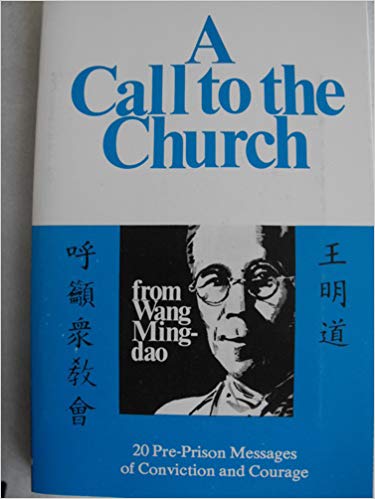
Before China’s church sank into the abyss of decades of persecution, just after the Communists gained control in 1949, the pastor of one of the largest churches in the land, Wang Mingdao, began to deliver and publish scores of prophetic sermons. They may have appeared doomsday to some, but without them many people could not have withstood the extreme violence which was about to be unleashed upon them. The book based on his messages, A Call To The Church, is needed now as it was then to make a new generation strong in the face of the coming assault. Wang, whom I met on numerous occasions, spent 23 years and 10 months in prison. The God who sent an angel to deliver Peter from jail sent His angels to sustain Wang. That’s two very different stories, yet the same God faithful over all.

Friends, this is a call to arms. We need to put on the full armor of God, and with our words and deeds to raise the shield of faith and sword of the Spirit for others as well. Why not ask God for a prophet’s mantle? He has always raised up voices in wilderness times; He is doing it now as well. For the sake of our families, our friends, our churches, our communities and nation, let’s ask the God of Jeremiah for a trumpet (Jer 4:5). Then let’s put it to our lips, that all of God’s people will be well armed to face the dark days which even now are descending upon us.

Defending Against Offense

“Offenses will surely come…” Luke 17:1

In Luke 17 Jesus introduces the subject of the Kingdom of God and of His return when teaching the disciples. It is in this context that He begins His discourse with a warning to guard our hearts from offenses. He follows with a message about offering forgiveness to someone who has sinned against you even up to seven times in one day, and then with a parable warning servants not to entertain the idea that the Master was treating them unfairly. In other words, He was telling them they needed to be careful not to get offended, not just by the actions of others, but by the actions of God Himself. The chapter closes with a picture of the sufferings and chaos that will accompany the hour of His return.

There is logic to this sequence. These are not unrelated, pieced-together narratives. As sure as the closing of the Age will be marked by wars and rumors of wars or earthquakes and disasters, the Last Days will also be a time when the people of God will be shaken to the very core of their beings. What you believe, how you believe, and to what depth, will all be tested. How you allow the actions of others, or even the actions of God Himself to affect you, will face intense scrutiny. Whether you stand or fall in that hour will largely hinge upon your ability to go through the fire and not become offended:

“They will deliver you up to tribulation and kill you, and you will be hated…And then many will be offended, will betray one another, and will hate one another.” Mt 24:9,10

It was the same when Jesus came the first time. Isaiah had prophesied that Jesus would offend people, which was later quoted by Paul and by Peter as the primary reason why the Pharisees rejected Jesus. He said:

“Behold, I lay in Zion a stumbling stone and a rock of offense,
And whoever believes on Him will not be put to shame.” Rom 9:33

The word in the Greek which is used is skandalon (v. -itzo) from which we get the word scandal, but which originally was used to describe a trap or tripping device causing people to stumble and fall. Time and again, we see that people would become offended by Jesus’ teachings and walk away.

“So they were offended at Him…” Mat 13:57

His words just did not fit their preconceived notions of what God should say. His actions were discordant with how they believed God should act: with the cross, of course, being the greatest scandal (offense) of all (Gal 5:11). Even as they left in disgust, Jesus would often turn to His own disciples and ask them, “Does this offend (i.e.scandalize) you?” (John 6:61) If you don’t completely understand Me or what I am doing, are you going to walk away too? This is what Jesus asked His followers then; and this is what He is asking us now as well.

This is serious stuff. Guarding our hearts from offense, whether in our relationships with others, when we feel mistreated, betrayed, hoodwinked, etc., or whether our anger is directed at God because we perceive that He has allowed great injustice to be heaped upon us, our ability to stand and not stumble in these hard times is dependent upon how we manage offense.

There is an interesting story in David’s life which enshrines God’s perspective on offenses. In 1 Sam 25 is the story about a wealthy man Nabal, whose name appropriately is translated as “Fool”. While David was a fugitive from Saul, he and his men stayed near Nabal and despite being in desperate need of supplies, and easily having the manpower to obtain these needs by force over Nabal’s men, David did not violate this trust in any way, coming instead to Nabal in an honorable way to ask if provisions could be made for their basic needs. When Nabal rudely refused, at first David was startled and vowed to retaliate. As he gathered his men in pursuit, Nabal’s wife Abigail quickly and wisely interceded, bringing all the supplies David needed for his men. Her reason?

“that this will be no grief to you, nor offense of heart to my lord, either that you have
shed blood without cause, or that my lord has avenged himself.” 1 Sam 25:31

In other words, God cared so much about David’s soul, that he moved upon Abigail to perform this deed in order to ward off any residue of offense from David’s heart.

Offenses will surely come. As the hour grows darker, and Satan’s desperation grows more intense, horrors and mass-scale injustices will abound in the earth. As it was in the days of the Pharisees, if we only bring our narrow textbook understandings of who God is and how He acts as pretexts for interpreting our times, we will stumble upon the same Rock as they did, missing God, and becoming offended. As it was in the days of Job, those who think they have God figured out will play the fools just at his friends did.

Beloved, in the same way these friends could not conceive of a God who would allow suffering, whose answers to the injustices which had befallen Job were completely misguided, when the earth begins to reel and rock like a drunken man, when the end-time shaking uproots and overturns, and violence, darkness, and deception abound, will we be ready? When the famines and pestilences are unleashed, will we still be able to sing songs about a good, good Father? When some of the most righteous and godly among us are taken out as martyrs in the days of the Antichrist’s revenge, will we run, or hide, or give up?

The Church of Jesus Christ, His glorious Bride, is told to make herself ready. One of the most important decisions you and I can make in this hour is that we will not succumb to offenses. If we are offended by something the pastor said, or our spouse, or a friend, or people in the church, how are we ever going to guard our hearts from becoming offended when gross darkness is the weather forecast for the unforeseeable future? If we allow ourselves to become angry with God during today’s trials and tribulations, what will happen to us when they grow in frequency and intensity? Will we stand, or will we stumble?

Thankfully, we will not face all of these “enemies” with the strength of today. As darkness increases, His glory and light will rise upon us in greater luminance. The grace we know today will be magnified to empower you to rise to any challenge the enemy has planned against you. The eclipse of Satan will be met with the rise of angelic hosts who will not leave us defenseless. And as God raised up Abigail for David, He will also raise up messengers to steer as away from reacting out of anger, or of harboring offense.

We must do our part. While these are exciting times, and we will see displays of God’s power and the perfecting of His Church and plan in unprecedented ways, the scope of tribulations and evil foretold in the scriptures should also cause us to shudder. For this reason, a call is going forth for us to gird up our loins. While the thought of these end-time scenarios are ominous and threatening, the greatest enemy may not be the devil you expect. As it was at His first coming, offenses may well leave the most casualties before His Second Coming too. We do well to arm ourselves with the same mind as the Apostle Paul in his defense before Felix:

“This being so, I myself always strive to have a conscience without offense towards God and men.” Acts 24:16

Terah’s Grave Mistake

Most people will ask me, “ah…who is Terah?” Actually, as you will see, that is part of the point. Most people have no idea who Terah is. The reason for this is both sad, and sobering. You see, Terah was Abram’s father, and, as we shall discover, he was a man who missed his destiny.

I remember being told that Abraham left the place called “Ur”, halfway between present day Baghdad and the Persian Gulf, in Southern Iraq. I heard that his ancestors were idol worshipers, and that God had spoken to him to leave Ur and travel to the land which we now know as Israel. I also remember studying that the distance he covered was some 1,500 miles (2400 km), a huge distance to cover on foot with all of one’s earthly possessions!

While all of this is true, there is a part of this picture that is missing. It all comes into focus when we read Gen 11:31:

“And Terah took his son Abram and his grandson Lot, the son of Haran, and his daughter-in-law Sarai…and they went out with them from Ur of the Chaldeans to go to the land of Canaan.”

Aha! So, it wasn’t Abram who was the first one called to go from Ur to Canaan; it was Terah. Terah had been commissioned to go. He had been given the opportunity to be the heir to the promise, to be a father of nations. But he stopped half way, and would not continue. How grievous! Think about it: the whole world would have recognized Terah as the greatest religious figure of ancient times. But instead, very people even know his name.

So what happened to Terah? His son died, that’s what happened. It takes some reading between the lines, but clearly, Terah was not able to move past the death of his youngest son.

In order to grasp this, you have to look back a few verses, starting in Gen 11:26. Here we find that Terah, son of Nahor, had three sons: Abram, Nahor (named after his father), and Haran. Then in verse 28 we see that “Haran died before his father Terah in his native land, in Ur”. So by the time this family (including Haran’s son Lot) hit the road, Haran had already passed away.

So why do I say that Terah would not continue the journey because his son had died? Well, when the whole family left Ur, as was custom in ancient times, they would have brought the bones of his son Haran with them. And when they arrived in Haran, verse 11:31 concludes by saying “they came to Haran and dwelt there.” Beloved, this is more than a coincidence. The town’s original name was NOT Haran. Terah named the place Haran, after his son who had passed away. Whether it was grief, or weariness, or fear, that caused Terah to stay in this place, we don’t know. But we do know by his choice of the name, that it became the spot where he wanted to forever memorialize and immortalize his son. As time passed, when “Terah died in Haran”, his own body was laid to rest NOT in the land of Promise to which he had been called, but in the place where he had stopped and buried his son.

Terah had made a grave mistake. It is a mistake I have seen people make so many times. It is a mistake that any of us can make, and that is why we must diligently lay hold of the reason for which we have been apprehended in Christ Jesus. The “upward call” of God belongs not to those who begin well, but to those who press towards the goal of the prize, and do no allow anything, not even the death of a son, to disrupt or distract from the purpose of God.

“I press on, that I may lay hold of that for which Christ Jesus has also laid hold of me…I press toward to goal for the prize of the upward call of God in Christ Jesus.” (Phil 3:12,14)

Thwarting Plan B

“Do not be afraid of them. Remember the Lord, great and awesome, and fight for your brethren, your sons, your daughters, your wives, and your houses.” Neh 4:14

One of Satan’s most powerful weapons is distraction. Obviously, if he can get us to sin, to compromise our integrity, to just blatantly choose our own will and way, he wins. But most of us love the Lord, and want to follow Him sincerely. If this is you, your enemy is likely employing Plan B against you.

The book of Nehemiah is an object lesson in Satan’s tactics. The Apostle Paul warns us to be on our guard, “in order that Satan might not outwit us. For we are not unaware of his schemes” 2 Cor 2:11. So just what is “Plan B”? A very large part of it is distraction. If Satan cannot get us to leave the path God has ordained for us, he uses all possible means at his disposal to get us to slow down or follow some fork in the road. I’ve seen it so many times.

In Nehemiah, the culprits Satan uses are Sanballat and Tobiah and friends. And boy are they persistent! They try threats, and lies. They appeal to the powerful, and hire a secret informer. They ridicule; they try to stir up suspicion, and doubt. To them, everything is negative, or impossible. They would be stars in our modern “fake news” media frenzy. They worked hard to divide, to stir up the base natures of men to be proud or insubordinate.

Nehemiah would have none of it. Neither should we. The wise pilgrim knows that these schemes have been employed over and over again, for thousands of years. Our job is not to heed them, not to give ourselves over to fear, and be diligent to keep the unity of the faith. Our duty is to keep our eyes on the Lord, great and awesome…the One who fights for us.

Friends, keep your attention on your assignment. Nehemiah did, and despite the onslaught of attacks which Satan had loosed upon him and the returning children of Israel, they rebuilt the wall of the city of Jerusalem which had been first destroyed some 300 years previously. Because they would not let their enemies outwit them, they finished the entire wall in record time: 52 days!

So much for Plan B!

Draining the Swamp

You may have noticed that something has shifted culturally, indeed spiritually. The sins of the mighty are suddenly coming out into the open. What was once tolerated is being tolerated no more. What was once done in secret is now being proclaimed from the housetops. Those who imagined their deeds would never face a day of reckoning are daily being exposed as liars, bullies, and predators. This is the Lord’s doing, and you may be surprised to learn, but Donald Trump has been a catalyst whom the Father has used to open these virtual flood gates.

Gen 15:16 reveals an oft neglected truth: God’s patience with sin has a limit. It reads, “In the fourth generation your descendants will come back here, for the sin of the Amorites has not yet reached its full measure.” Again, in the story of Sodom and Gomorrah we see that God had come down to execute judgment upon these cities because the outcry of their sins had reached a point at which there was no hope for redemption. Jesus himself spoke of a “filling up” of the measure of the sins of the fathers, and there are ten references in scripture to the “cup of God’s wrath” which is slowly being filled, until it is poured out.

So the question is, have our sins “reached to heaven” (Rev 18:5) so that God is orchestrating the events we now see unfolding before our very eyes? The answer seems obvious. Another period in history when there was a similar tipping point was the time God chose to send His Son into the world. The Bible refers to it as “the fulness of time” (Gal 4:4), constituting the perfect time for God to intervene in human history.

The days of Jesus’ first coming were also characterized by a period of intense shifting and shaking. We see this in the ministry of John the Baptist. Consider this: John was an oddball. He ate locusts and wild honey, and dressed in camel’s skins.  He preached a hard message (“Repent!”), and went far into the wilderness areas of the Jordan River, forcing people to walk long distances to hear him. Among the multitudes were soldiers, tax collectors, yes, even scribes and Pharisees. They were ready to repent. It was a day of reckoning as the Light of the world was rising to full day exposing the deceit, wickedness, and adulteries of men. Even the evil deeds of the mighty Herod were being brought out into the open. In earlier times, it would have been unthinkable that someone like Zacchaeus, perhaps the wealthiest man in the entire city of Jericho, would voluntarily and publicly confess his extorting and corrupt ways. If there was ever a time in the history of mankind when cultural and spiritual clashes and transformation were on exhibit, it was then. It is also now.

So what does this have to do with Donald Trump? Scripture affirms that God raises up leaders at significant and hinge points of history. Sometimes these men, like King Cyrus of Persia, are not even “believers”. They are outsiders, and yet God says of them: “Cyrus…shall perform all of My pleasure” (IS 44:28). They become instruments of His Hand, and at times even speak things which are in the heart of God for their generation. They wield influence over great masses of people, and from their seats of authority their words become like hammers to break through resistance in high places, or bring things into alignment with the purpose of God. A clear example of this was the High Priest Caiaphas who said “You don’t realize that it’s better for you that one man should die for the people than for the whole nation to be destroyed.” It goes on to say that “he did not say this on his own authority, but being high priest he prophesied” (JN 11:50,51).

When Donald Trump boldly announced he was going to drain the swamp, he was not simply speaking by his own conviction. When he became President, from this office of influence, in a “fulness” moment, these words carried a weight far beyond the man. Whether you agree with Donald Trump’s policies, or question his business practices or careless tweets through the years is not the point. When he called out fake news, something began to shake not only in the media world. Heaven itself has moved to call the powerful to account. When he excoriated the entrenched swamp monsters of the political establishment, it was by the Finger of God, for He Himself had determined that the outcry of their corruption and the cup of their perverse and crooked world had filled. I believe what we are witnessing now is the beginnings of the reelings of a drunken earth* in the face of a God who has clearly told us that He will “yet once more” …shake not only the earth, but also heaven. The ultimate and final purpose of these things are immutably spoken of in Hebrews 12:27-29:

“Now this, ‘Yet once more,’ indicates the removal of those things that are being shaken, as of things that are made, that the things which cannot be shaken may remain. Therefore, since we are receiving a kingdom which cannot be shaken, let us have grace, by which we may serve God acceptably with reverence and godly fear. For our God is a consuming fire.”

*For more on this compelling prophetic picture, please read Isaiah 24:17-23!

The Silent Treatment

“He was oppressed and He was afflicted,
      Yet He opened not His mouth;
He was led as a lamb to the slaughter,
     And as a sheep before its shearers is silent
          So He opened not His mouth.” IS 53:7

I’ve watched in amazement as sheep are corralled into a channel and take their turns to be sheared. I’ve watched as they are flipped over on their sides. And I have watched as the shearer applies the denuding blade to their bellies, necks, ribs, legs, and backs and then like an egg flopped over until their whole body is stripped bare. I’ve watched as these sheep did not struggle or flinch, but docile and completely at peace, submitted to the knife of their master, opening not their mouths. And I have thought about what a beautiful picture this is of Jesus, as described here by Isaiah prophesying about the crucifixion of the Son of Man. I want to be like this sheep; no, better yet, I want to be like the Lamb of God.
But silence does not come easy for me. When Jesus was questioned before Herod, who was in fact intending to free him, “He answered him nothing” (LK 23:9). Accused of ridiculous “crimes”, Jesus completely resisted the temptation to defend or justify Himself, but chose rather to commit Himself into the Hands of the Judge of all the earth, knowing that He would always do the right thing. I, on the other hand, reason that it is only natural to defend myself, and righteous to stand up for “the truth”. In reality, truth is not just about content; it is about character.
I’m learning that God always gives me a choice. Jesus chose the high road, committing His way to God. When I choose to defend or justify myself, I have to accept the results of my choice. When I choose to allow God to speak for me, then I am positioning myself to trust God’s judgment, and leave the results with Him.
I’ve discovered too that sometimes I open my mouth because I am seeking sympathy. Pity loves company; but the only cake served at a pity party is bitter. And my choice to imbibe comes at a great cost. When I seek the sympathy of man, I unwittingly forfeit comfort that comes directly from the Comforter. As the axiom goes, you cannot have your cake and eat it too. It is either the sympathy offered by a friend or colleague, or it is the compassion of your Creator. My choice. Yours too.
Jesus’ silence came at literally the most lonely and difficult juncture of His life. He had just been betrayed into enemy hands by a friend with whom he had daily walked, eaten three meals a day, and shared cold nights for more than three years. Another, perhaps His closest friend, had denied knowing Him three times in a row. The rest of His band of buddies had also rejected, and abandoned Him in His greatest hour of need. He had told them time and time again what He was about to go to the cross; and yet they left Him completely alone.
You did this as a man, Jesus. You were subject to all the fears, and doubts, and feelings of alienation and solitude as any of us. Despite the temptation to rebuff, or to be understood, You opened not Your mouth. You became just like me, so that I could choose to drink my cup as You did, and become like You. Help me, dear Jesus, to take the high road, to commit my way completely to the Father, to set my hopes on the comfort that comes from you, Holy Spirit. Sustain me, inspire me, and impart to me greater grace, that I might learn from you, and be silent before any and all of my accusers. Amen.

Sheep Shearing (2:21)

A New Mind and A Different Spirit

“So it was, when all the men of war had finally perished…that the Lord spoke to me, saying, “This day you shall cross over…” DT 2:16

It was a ghost town. There were no tumbleweeds, no creaking, hinge-swung doors on the old saloon; and yet the mood felt every bit as eerie. As we passed these hollow homes intended to bring hope and progress to wandering hordes of “unfortunate” souls, I was struck by the Jordanian gap that exists between desert and promise. To the Chinese government, of course these Tibetan nomads would want to live in two-storey concrete homes in a community with all the services and trappings of modernity, rather than their makeshift, yak-skin yurts. Naturally they would want electricity, heating, convenience stores, hospitals, and schools for their kids, right? Wrong!

It takes more than a change of address to take up residence in our Promised Lands. As Joshua stood on the banks of the Jordan, of the millions who had escaped the oppression of the Egyptians by the Mighty Hand of God, only he and Caleb were left among those who had been twenty or above when Pharaoh’s army was swallowed by the waters of the Red Sea. God could not use those who had grown accustomed to the “right way to fight” in the Wilderness. Clearly Jericho could not taken in the conventional way. Old “weapons” would have to be laid down. Old soldiers would have to die. So what is the key that could open these gates?

A New Mind
Twelve men stood tall, shoulder to shoulder, the pride of the nation. Moses had sent these stellar, hand-picked representatives of each of Israel’s tribes to survey legendary Canaan, the land of their forefathers. Despite testifying of its richness, and tasting its grapefruit-sized grapes, ten of them shrank back in fear. Ten of them imagined themselves to be grasshoppers, besieged by an army of Goliaths. Two, however, refused to be ruled by circumstances. Joshua and Caleb exuded confidence that despite all manner of opposition, Israel could immediately take back the land which flowed with milk and honey. What was it that set these champions apart?

When Moses died, Joshua had been chosen to lead the children of Israel to take possession of the land of the Giants. Would God throw these enemies into the sea? Would He rain fire and brimstone down on them as He had done in Sodom so many years before? Would he cause confusion to come upon them so that they would fight against each other? What was the battle plan? The answer must have jarred Joshua:
     “Never stop reading the Book of the Law [Moses] gave you. Day and night you must think about what it says. If you obey it completely, you and Israel will be able to take this land.” Jos 1:7,8 (CEV)

For years Joshua had led the armies in conquest after conquest. His military instincts were strong; his exploits would inspire songs and bedside tales for generations.  But this new battle plan for victory was not like anything he had ever done before: Joshua must renew his mind by a thorough immersion in and obedience to the Word of God. If he would only meditate on and permeate his mind with God’s law day and night, his thinking, his perspectives, his knowledge of God and His ways, would undergo such a transformation that God said no man would be able to stand before him all the days of his life. Daily feasting at the table of God’s promises meant Joshua would never see himself as a grasshopper before any man, ever. Embracing God’s ways over his ways, thinking God’s thoughts and not his own, establishing God’s righteous standards and judgments, Joshua had complete confidence these things would guarantee God’s leadership, protection, and intervention as they pressed across the Jordan River and into fortified cities and strongholds of the enemy.

A Different Spirit
The other key God revealed to Joshua in that historic riverside encounter was that he needed to be “strong and courageous”. It is never enough just to know what is the right thing to do, have the right things to say, or what is the proper way to respond. Many people have tremendous depths of understanding; they just don’t have the guts to do what they know to be right! Brilliance is a great quality, and wisdom is often gained through the crucible of tests and difficulties. But without courage its like having a jet with no fuel, a bite with no teeth, like purchasing a home and not having a penny left to buy lights, flooring, appliances, or a single piece of furniture!

Joshua’s fellow spy and friend Caleb exhibited this principle best. While the rest of the spies gave an evil report about the obstacles and dangers which barbed the way before them, Caleb had set his sights on One who was over all and had the power to not simply gain them entrance into cities, but to literally bring their walls crashing down at his feet. In contract to the others, Caleb boldly declared: “Let us go up at once and take possession, for we are well able to overcome it” (Num 13:30). Beloved, God was listening. The Lord then spoke of Caleb to Moses saying, “he has a different spirit in him and has followed Me fully” (Num 14:24). After personally praising Caleb, God says the “tentative ten”, the other timid tribal leaders, would die in the wilderness, while Caleb and Joshua would be given the honor of bringing the nation into the Land of Promise.

Much more could be said about these two heroes of the faith. Joshua, armed with a new mentality, perfectly followed the detailed instructions (Word) the Lord gave him to take and conquer the ominous walled city of Jericho. Caleb went on to boldly defeat the Anakim Giants who had defied and thwarted every attack for centuries until this 85 year old spirit-filled juggernaut wiped them out in one of the most impressive acts of courage ever recorded in history.

Your and my success in this life will hinge on whether or not we follow in the footsteps of these two forerunners. Will I whimpishly follow the crowds and cower before the struggles which taunt our generation? Or will I arm myself with a new mind, and a different spirit, and thereby perform exploits which bring honor and glory to the King. The mountain stronghold Caleb conquered was none other than Hebron, the future seat of the King’s throne. We too are being called to hasten the day when the King of Kings will return to sit on His rightful throne forever. To do so, we are going to need a renewed mind like that of Joshua, and a tenacious spirit like that of Caleb.  Amen.

If Any Lacks Wisdom

“If any of you lacks wisdom, you should ask God, who gives generously…and it shall be given to you.” James 1:5

A few months ago the night before an international conference for which I had numerous responsibilities, I went out for a late night walk around the hotel grounds. As I was praying and asking the Lord for wisdom, a dark shape skimmed over the surface of the pond and landed on the branch above my head. I was surprised to see an owl peering down at me in the midst of this Asian urban “jungle” of 8 million people. Still, I took it as a sign, that if “any of you lacks wisdom…it shall be given to you.”  He sat there for the next hour just above me.

The next night before leading the congregation in worship, I shared my owl story. After the service the General Manager and a few members of his staff met me in the lobby. The GM suddenly said, “I can see that God is really with you,” indicating he had been listening to my owl testimony. My curiosity tweaked, I proceeded to ask him and his staff if they had been employed at the hotel for long? Each of them had been there from periods of many months to several years. “Have you ever seen an owl here on the hotel grounds before?” Nope!

Three days ago I was out with the kids at a local park/reservoir. It had gotten dark, and as we were leaving we noticed something out of the ordinary in the road. To our surprise, we stopped to find it to be a small owl with an injured wing. So we decided to bring it home and nurse it back to health. Meet Harvey.

Beloved, these two incidents are not a coincidence. Hebrews 1:1 says God “at various times and in various ways” has always been speaking to His people. So what is He saying to us today? God is willing and waiting to give wisdom to anyone who asks. Sometimes He swoops down with a sudden rush of wisdom that comes to us when darkness surrounds us. Yes, sometimes it comes like a gift, or a thought, or a word. But beloved, He does not just want to stop there. He wants His wisdom to take up residence. Owl bet you hadn’t thought about that! Amen.

Father Abraham

What kind of a person does God choose to use? Look no further than the man with whom God formed His covenant to bless all the families of the earth. What did He see in Abraham which solicited His attention and ultimately resulted in an unparalleled endorsement, the likes of which has never been seen among so many nations and over the expanse of millennia? One of the key indicators is found in the name that God gave him: Abraham, the father of nations.

Father here means more than simply the one who started something. God chooses words carefully. For in this case, father is not simply a title given by God; for in Abraham God was setting in place the most vital characteristic of how He builds His Kingdom. God builds through people who are a reflection of His Father heart.

At first glance, one might conclude that God just dropped His entire unconditional promise into his landmark agreement with Abraham. But God’s promise is not the same as a guarantee. Promise precipitates potential. It unlocks resources. Through promise, the thunder cloud of God’s abundant rain of supply and deluge moves into position over us. It is very likely that this same cloud had settled over Abraham’s own father, Terah. But the rain never came down on Terah. For although he “went out” from Ur, he never made it to the land of promise (Gen 11:31).

A more careful reading of the story of Abraham shows that God was not simply interested in finding someone through whom He could bless the earth. He was targeting someone with whom He could partner to bless the earth. There is a big difference. Abraham would not arise as a figurehead. God was not looking for someone on whom to hang a title, or pin a badge. He was searching for someone not simply by whom He would bless the nations, but through whom he could do it. And for this, He needed a father.

There are many examples of how God was proving and testing Abraham not only to be a father, but to become one; not only to have a child, but to raise an heir. We see how the extent to which God was going to bless Abraham grew as he submitted to God’s purposes, believed in His words, obeyed, and sacrificed. And so God did not institute a change in his name from Abram (Exalted Father) to Abraham (Father of Nations, or a Multitude) until thirteen years after the initial covenant. God appeared to him numerous times, and in each case, after another vital fathering principle had been exhibited or learned, the promise deepened, and his trust in Abraham grew:

“Arise, walk in the land…for I give it to you.” (13:17)
“When the vultures came down on the carcasses, Abram drove them away…and they shall come out with great possessions.” (15:11,14)
“Walk before me, and be blameless…I will make you exceedingly fruitful…and kings shall come from you.” (17:1,6)
“Abraham went with them to send them on their way…Shall I hide from Abraham what I am doing.” (18:16,17)
“Because you have done this thing…your descendants will possess the gate of their enemies.” (22:16,17)

Sarai too was barren for many years after the promise was given. Her name was changed too only after she had proven that she was not only ready to be a princess (Sarai), but to become a mother of nations (Sarah). Her heart had to be ready before her womb.

It is never promise alone which harnessed God’s greater blessings. In these days of sloppy agape, and easy grace, we have trumpeted the goodness of the God who promises, while neglecting the importance that our faithfulness and obedience plays in releasing the greater things He has prepared for us. We have misinterpreted His blessings as authorization, and in doing so we have glossed over our laziness and passivity rather than pursuing a diligent and excellent spirit. We may have begun well, like Terah who went out from his father’s house and journeyed towards the promise, but who found himself at the end of his life only half way there, living in tents in the town he named after his son who had passed away.

I don’t want to just be blessed; I want to be one through whom God can disburse His blessings. I don’t want to simply point to an abundance of clouds overhead; I want to get soaked. I don’t want to just see His Kingdom come; I want to hasten its coming. I don’t want to just be a good boy; I want to become a father whom God can trust with peoples, and nations. And so I am asking, Lord, not only that I become an heir of Abraham, but that I may walk in his steps, and wear his shoes. O God, make me a father! Amen.